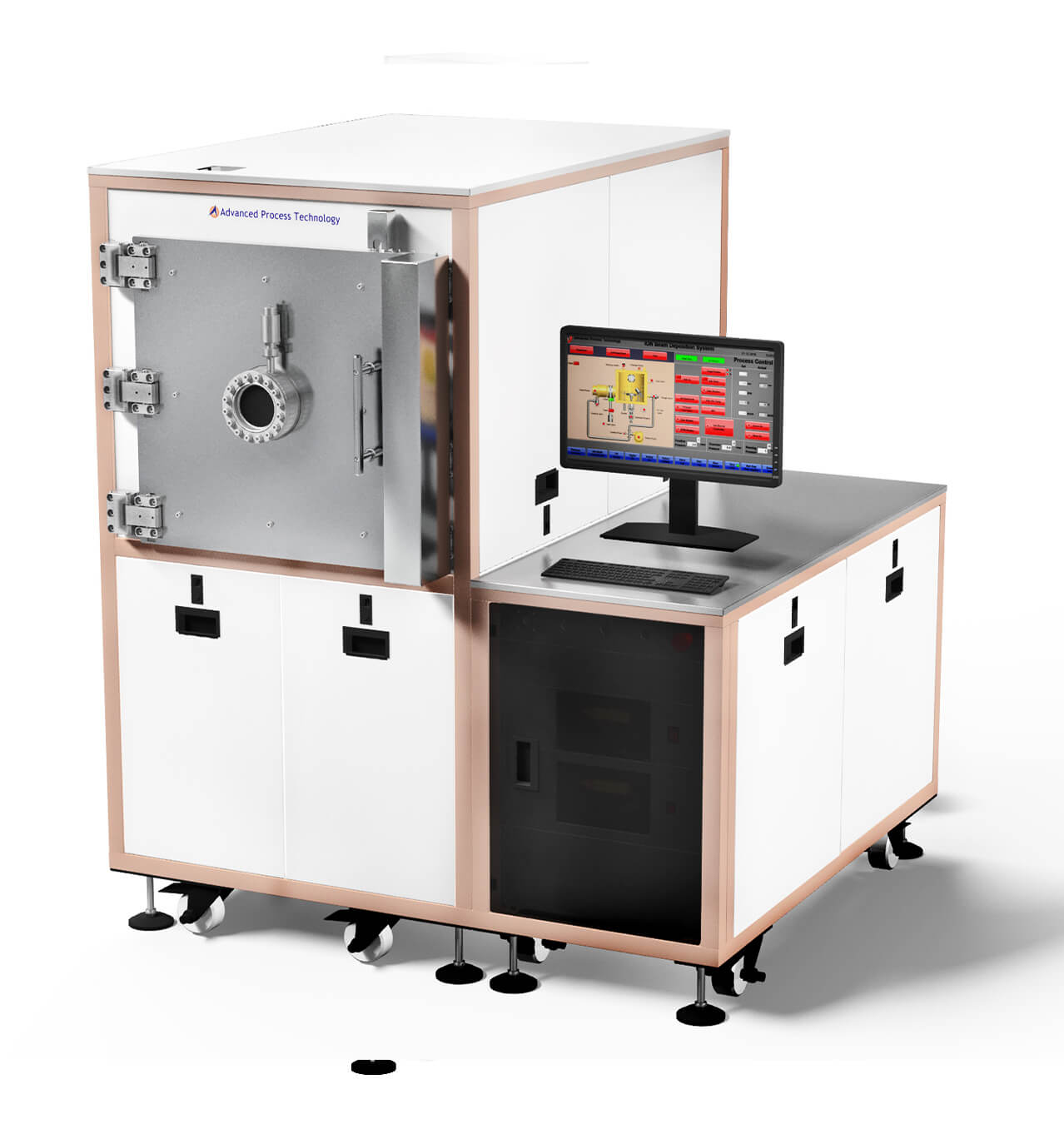
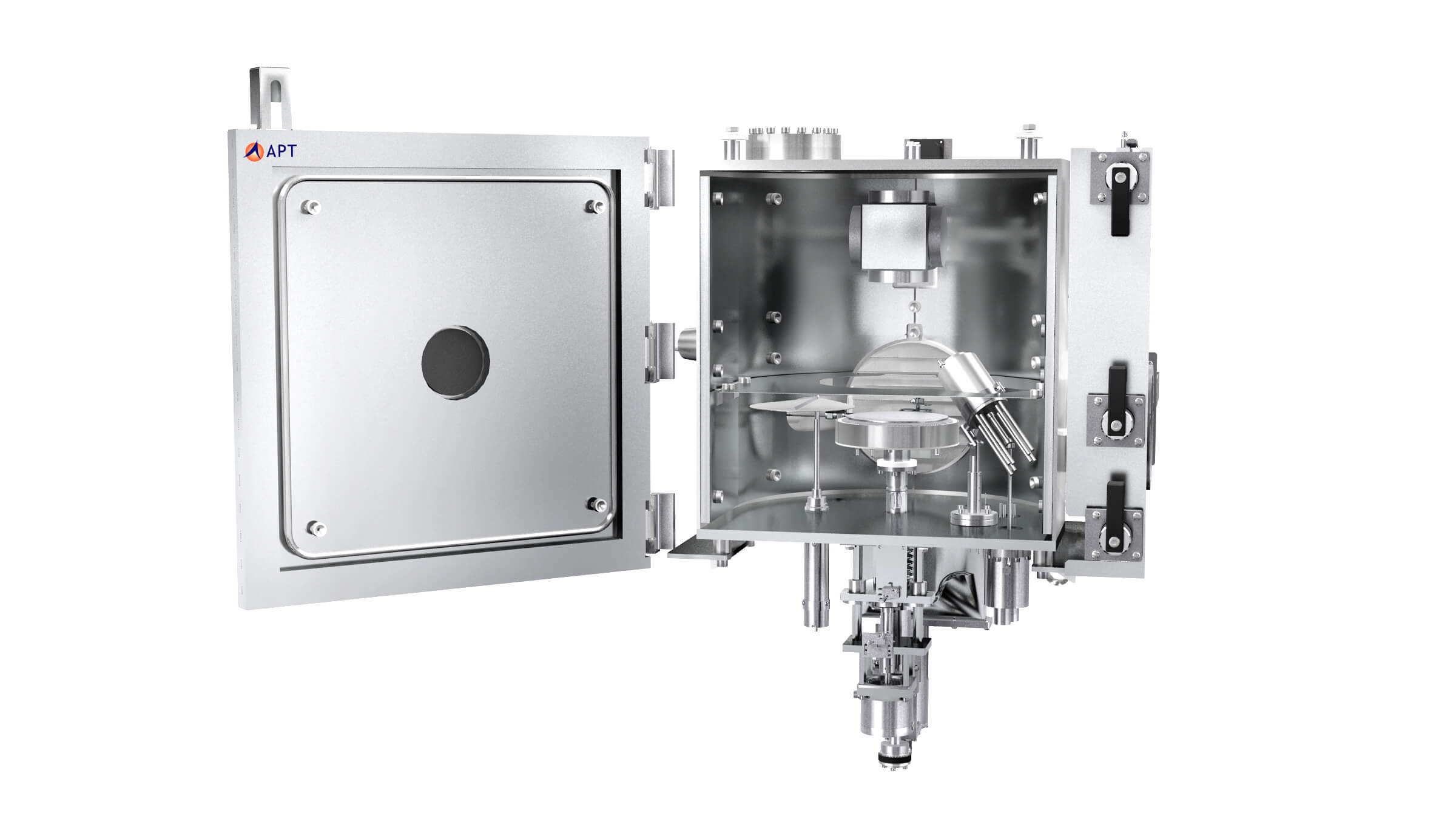
ION Deposition System
Ion Source Assisted Deposition (ISAD) is an advanced thin-film deposition enhancement technique that introduces a controlled flux of low-energy ions onto the substrate during film growth. By precisely tailoring ion energy and ion current, ISAD enables film densification, improved adhesion, reduced stress, and controlled microstructure, making it ideal for high-performance coating applications.
Advanced Process Technology Pvt. Ltd. (APT), as an original equipment manufacturer (OEM), designs and integrates ISAD modules seamlessly with PVD systems such as sputtering and thermal evaporation.
Key Features
- Kaufman / End-Hall Ion Source for stable and uniform ion delivery
- Adjustable ion energy and beam current for precise process control
- Synchronized operation with sputtering and thermal evaporation processes
- Integrated beam neutralizer to eliminate substrate charging
- Uniform ion beam profile suitable for large-area substrates
- Manual or automated control modes for R&D and production environments
- Robust design for long process life and repeatable performance
Benefits
- Enhanced film adhesion to a wide range of substrates
- Increased film density and reduced porosity
- Stress control in optical and functional coatings
- Improved texture and microstructure tailoring
- Superior coating performance at low substrate temperatures
Typical Applications
- Hard and wear-resistant coatings
- Optical thin films with reduced intrinsic stress
- Adhesion enhancement layers
- Functional and decorative PVD coatings
- Texture and microstructure control in advanced materials
Typical Specifications
| Parameter | Specification |
| Ion Source Type | Kaufman / End-Hall |
| Ion Energy | 10 – 150 eV |
| Beam Current | Adjustable |
| Beam Diameter | Up to 150 mm |
| Neutralizer | Included |
| Process Gases | Ar, O₂, N₂ |
| Integration | Compatible with PVD systems |
| Control Mode | Manual / Automated |
| Applications | Adhesion improvement, densification |
System Integration
APT’s ISAD solution is fully compatible with PVD platforms, including:
- Magnetron sputtering systems
- Thermal evaporation systems
- Hybrid PVD architectures
The ion source can be precisely synchronized with the deposition process to ensure optimal ion-to-atom ratio and uniform film properties.